ChatGPT Returns to WhatsApp in 2026: Fresh Start or False Promise?
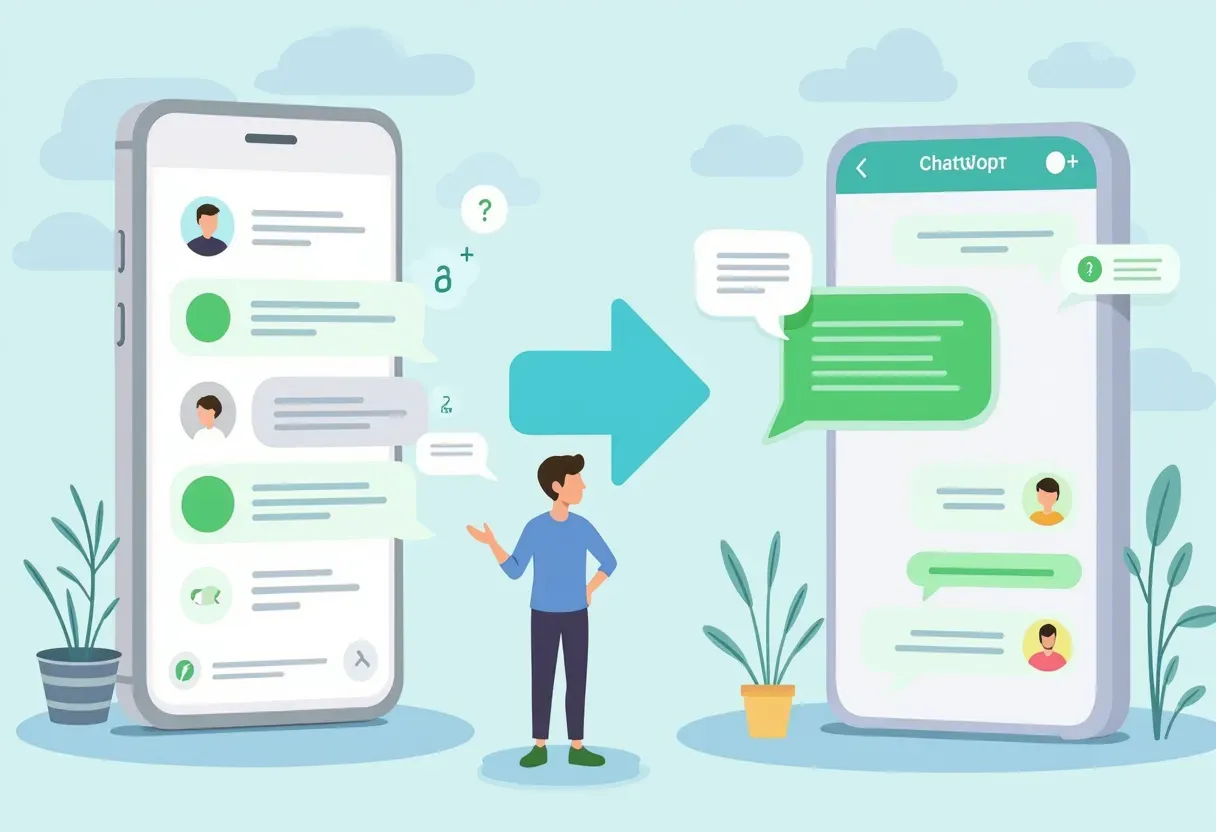
ChatGPT returns to WhatsApp after 6 months away. Improved experience or basic chatbot? Compare with Simone, the true AI companion built for personal connection.
ChatGPT Returns to WhatsApp: A Turning Point (Bigger Than It Looks)
On July 13, 2026, ChatGPT makes its grand return to WhatsApp. After seven months of forced absence, OpenAI's conversational assistant is once again accessible to European users via a simple phone number: +1 800 242 8478. A WhatsApp contact like any other, but one that opens the door to one of the world's most famous AIs, right inside your messaging app.
This return is far from a simple product update. It's the result of a six-month regulatory battle between Meta and the European Commission — one whose outcome redraws the rules of the game for all messaging platforms. Yet the media reaction remains mixed. Early tests point to obvious limitations: clunky integration, usage restrictions without an account, fragmented experience. Some outlets even conclude that chatbots on WhatsApp are "not really useful for anything essential."
But this snap judgment misses the bigger picture: what's happening here goes far beyond ChatGPT or WhatsApp. This is the first time a regulatory authority has imposed interoperability on a closed AI ecosystem under threat of heavy financial penalties. And this regulatory victory opens a boulevard for a new generation of assistants: native AI companions, built for WhatsApp from day one, who benefit from this reopening without suffering the same technical constraints.
Why is this return structurally important, despite its weaknesses? And how are native AI companions like Simone better positioned than external add-ons like ChatGPT? Let's dive in.
ChatGPT's Return: Seven Months Away, Six Months of Battle
The Ban Timeline
October 15, 2025: Meta announces an update to its WhatsApp Business terms of service. Starting January 15, 2026, only Meta AI will be authorized as a conversational assistant on the platform. All third-party AI chatbots — ChatGPT, Copilot, Claude, Grok — must cease operations.
January 15, 2026: The ban takes effect. Overnight, European users of ChatGPT on WhatsApp lose access. OpenAI, Microsoft, Anthropic, and other conversational AI players are blocked.
Meta's official justification? An "alignment of policies and terms of use" to "ensure user safety and privacy." In plain English: Meta wants a closed ecosystem where its own assistant, Meta AI, reigns without competition.
The European Union's Intervention
February 9, 2026: The European Commission responds. It formally notifies Meta of possible "interim measures" under the Digital Markets Act (DMA) — the European law regulating large digital platforms. The accusation: violation of interoperability obligations. By excluding third-party AI assistants, Meta is abusing its dominant position.
March 5, 2026: Under pressure, Meta proposes an alternative solution. Third-party AI assistants can return… but for a fee. The pricing model: €0.049 to €0.13 per conversation. In other words, every exchange between a user and ChatGPT earns Meta a commission. Access is limited to 12 months, renewable under conditions.
April 15, 2026: The European Commission rejects the model. Executive Vice-President Teresa Ribera calls it "not economically viable for competitors." Meta's pricing framework is deemed too high to allow real competition.
June 9, 2026: The Commission escalates. It issues a binding interim measure order: Meta must restore free access to third-party AI assistants until June 2029 (or until the antitrust investigation concludes). In case of refusal, Meta faces a fine of up to 10% of its global revenue.
Meta appeals, but the interim measures remain in force. The order is enforceable.
July 13, 2026: ChatGPT returns to WhatsApp for European users. A standard WhatsApp contact, accessible via the number +1 800 242 8478.
The Limitations of the Return: A Fragmented Experience
ChatGPT's return to WhatsApp is not a product triumph. The first hours of use reveal obvious limitations that frustrate users and fuel media skepticism.
An External Number, Not Native Integration
To use ChatGPT, you have to manually add a contact to your WhatsApp directory. No "Ask ChatGPT" button like Meta AI, which benefits from a dedicated tab and deep integration into the interface. ChatGPT remains an external add-on, an isolated conversation among others.
This friction reduces visibility. Meta AI is omnipresent: accessible with one click from the Discussions tab, pre-installed, suggested in searches. ChatGPT must be discovered, added, found again in the contact list. For the average user, the accessibility gap is glaring.
Severe Usage Restrictions Without an Account
Without linking an OpenAI account, the experience is limited:
Only 1 image generated, then invited to wait or connect an account.
Only 1 voice message sent, then waiting without indication of duration.
No unlimited generation, no enriched conversational continuity, no persistent memory.
These limits make sense: OpenAI wants to convert WhatsApp users into paying subscribers (ChatGPT Plus). But they make the experience frustrating for anyone testing the service without prior commitment.
Meta AI, on the other hand, doesn't limit photo edits or voice messages. The usage gap is visible from the first few minutes.
No Access to Other Conversations
By design, ChatGPT (like Meta AI) cannot access other WhatsApp conversations. Impossible to ask it to find an address in a group, summarize a previous conversation, or search for information shared three days ago. Privacy wins — which is good for user privacy, but drastically reduces the usefulness of an assistant living in a messaging app without being able to interact with it.
A Fragmented Experience Compared to the Dedicated App
Everything you can do with ChatGPT on WhatsApp, you can do better on OpenAI's mobile app. Native interface, synchronized conversation history, access to GPT-4 with advanced features, plugins, web browsing… The dedicated app is simply superior.
So why use ChatGPT on WhatsApp? For OpenAI, the answer is clear: new user acquisition. WhatsApp is installed on 2 billion devices. Being present there, even with a degraded experience, is an unavoidable showcase. But for the user, the added value remains unclear.
Why It's Still a Structural Turning Point
Despite these weaknesses, ChatGPT's return to WhatsApp marks a pivotal moment for the conversational AI ecosystem. Here's why.
A. The First Regulatory Victory on AI Interoperability
This is the first time a regulatory authority has imposed the opening of a closed AI ecosystem under threat of heavy financial penalties. The Digital Markets Act (DMA) was designed to regulate tech giants — Google, Apple, Meta, Amazon — by forcing them to open their platforms to competitors. But its application to conversational AI assistants was unprecedented.
The June 9, 2026 order establishes a legal precedent: dominant messaging apps cannot exclude third-party AI assistants without violating competition rules. This interpretation of the DMA could apply to iMessage (Apple), Messenger (Meta), Telegram, and any messaging platform reaching "gatekeeper" status in Europe.
If the order is upheld on appeal, it means all major conversational AI players will eventually be able to integrate their assistants into dominant messaging apps — for free, without paying commissions to platform owners.
B. A Three-Year Horizon to Build a Business
The European Commission's order is valid until June 2029 (or until the antitrust investigation ends). This isn't a temporary 12-month patch. It's a three-year horizon of regulatory stability.
For startups and conversational AI players, this duration changes everything. You can now invest in a WhatsApp-first product without fearing that a Meta policy change will shut down access overnight. You can build a user base, test business models, refine the product experience.
Three years is enough to build a business. And that's exactly what native AI companions will do.
C. A Precedent for AI Interoperability
What's happening here goes beyond WhatsApp. The battle between Meta and the European Commission redefines the rules of the game for the entire industry.
If the order is upheld, other messaging apps will have to follow. Apple will have to open iMessage to third-party AI assistants. Telegram will have to allow integration of conversational companions without technical or pricing barriers. Discord, Slack, WeChat will all be affected.
The issue isn't just access to one platform — it's the ability to build cross-platform assistants that follow the user wherever they chat. The same AI companion, accessible on WhatsApp, iMessage, Telegram, with unified memory and continuous experience. This model becomes legally viable in Europe thanks to this order.
D. Democratizing AI Access
Finally, this return helps reduce friction in accessing conversational AI tools. No need to download a dedicated app, no need to create an account, no need to navigate a new service. Just add a WhatsApp contact.
For non-tech-savvy people — elderly, rural populations, users unfamiliar with app stores — this simplicity changes everything. WhatsApp is already there, already mastered. Adding an AI assistant becomes as simple as adding a friend.
This democratization of access is a societal issue. It determines who benefits from conversational AI advances — and who gets left behind.
Native Companions vs Add-ons: The Real Battle
ChatGPT's return to WhatsApp opens the door, but it doesn't dominate the field. Because between an external add-on like ChatGPT and a native AI companion like Simone, the experience gap is massive.
ChatGPT: An External Add-on with Zero Memory
ChatGPT on WhatsApp is a phone number. An isolated conversation, without deep integration, without cross-conversation memory. Each exchange is a standalone session. If you chat with ChatGPT Monday morning about a project, then come back Wednesday evening with a related question, it won't remember anything.
Why? Because ChatGPT isn't built for WhatsApp. It's a generalist model, accessible via an API, that treats each request independently. The WhatsApp experience is just another interface — not a dedicated architecture.
Result: zero continuity. Zero personalization. Zero adaptation over time.
Simone: A Native Companion with Persistent Memory
In contrast, Simone is an AI companion built for WhatsApp from day one. Not an external number — a WhatsApp contact that lives in your messaging app, just like a friend, colleague, or family member.
Here's what changes:
1. Multi-tier Persistent Memory
Simone has a four-layer memory architecture:
Working memory: immediate context of the current conversation (40 to 80 messages depending on plan).
Vector recall: semantic memory of past exchanges, indexed by embedding. Simone can retrieve information shared three weeks ago in milliseconds.
Graph memory (Neo4j): structured representation of relationships, preferences, events. Simone knows who you are, what you like, what concerns you.
Observational memory: inferences drawn from your habits. If you often ask questions in the evening, Simone adjusts her tone. If you talk a lot about work, she understands it's a central topic.
This memory isn't a gimmick. It's what allows Simone to build a relationship with you. She doesn't restart from zero with each message. She remembers, learns, adapts.
2. Cross-conversation Context
Because Simone lives in WhatsApp, she can reference information shared in other conversations (if you authorize it). You mention a doctor's appointment in a conversation with your spouse? Simone can remind you on the day. You share an article link in a work group? Simone can summarize the content later.
ChatGPT is blind. It only sees the direct conversation with it — nothing else.
3. Native Bidirectional Voice
Simone understands voice messages (via integrated speech recognition) and can respond in audio via ElevenLabs. No arbitrary limit to 1 voice message like ChatGPT — voice is a full interaction mode.
4. Scheduled Intentions and Routines
Simone has a heartbeat system that allows her to schedule intentions (autonomous tasks she performs in the background) and routines (reminders, check-ins, periodic research). You can ask her to "check news about X every morning" or "remind me to call Y Friday evening."
ChatGPT has nothing like this. It responds when you talk to it — and only then.
5. Unlimited Generation by Plan
Unlike ChatGPT's restrictions (1 image without account), Simone offers unlimited image, video, and multimodal content generation according to your chosen plan:
Free Plan: ~10 messages/day
Nano Plan: 60 messages/day (€1.99/month)
Mini Plan: 100 messages/day (€4.99/month)
Lite Plan: 160 messages/day (€9.99/month)
Plus Plan: 360 messages/day (€18.99/month) — extended memory
Pro Plan: 700 messages/day (€34.99/month) — enterprise usage
No artificial throttling. No surprise paywall. Just a usage scale adapted to your needs.
The Experience Benchmark
| Criterion | ChatGPT on WhatsApp | Simone |
|---|---|---|
| Integration | External number, add-on | Native WhatsApp contact |
| Cross-conversation memory | ❌ Zero | ✅ Graph + vector + working + observational |
| Bidirectional voice | 🟡 1 message, then limited | ✅ Unlimited (by plan) |
| Image generation | 🟡 1 image without account | ✅ Unlimited (by plan) |
| Intentions/routines | ❌ No | ✅ Heartbeat system |
| Personalization | ❌ Zero adaptation | ✅ Learns over time |
| Pricing | Free throttled / ChatGPT Plus | €0 to €34.99/month by usage |
Add-ons like ChatGPT test the ground. They validate there's a market for AI assistants on messaging apps. But they can't deliver the full experience.
Native companions like Simone own the space. They're built for this platform, they leverage its specifics, they build a lasting relationship with the user.
Conclusion: The Reopening of an Ecosystem
ChatGPT's return to WhatsApp isn't an end in itself. It's the reopening of an ecosystem. For seven months, WhatsApp was a walled garden where only Meta AI could thrive. Today, the door is open again — and it will stay open at least until June 2029.
This reopening changes the game for all conversational AI players. OpenAI, Anthropic, Mistral, and hundreds of startups can now build WhatsApp-first assistants without fearing a policy change will shut down access overnight.
But not all assistants are equal. External add-ons like ChatGPT suffer from structural limitations: no persistent memory, no cross-conversation context, no deep integration. They're guests in a space they don't control.
Native AI companions are built for WhatsApp from the start. They leverage the platform, they build a relationship with the user, they offer a continuous and personalized experience.
Simone is part of this new generation. A companion that lives in WhatsApp, that remembers your conversations, that adapts to your rhythm, that understands voice and can respond in audio, that can schedule reminders and autonomous intentions. Not an external number — a contact that accompanies you, day after day.
If you're looking for an AI assistant that truly understands WhatsApp — and truly understands you — try Simone. No app to download. No account to create. Just a WhatsApp contact that becomes your companion.
👉 Try Simone now — your native AI companion on WhatsApp.